
Aging Is Not a Checklist: From Hallmarks to Stress, Adaptation, Recovery, and Network Constraint

For much of modern aging research, one of the most influential ways to think about aging has been through the Hallmarks of Aging: genomic instability, telomere attrition, epigenetic alteration, loss of proteostasis, mitochondrial dysfunction, cellular senescence, altered nutrient sensing, and other processes that become increasingly disturbed with age.
This framework has been enormously useful. It gave aging biology a common language and helped organize a field that was previously fragmented across molecular pathways and organ systems.
But there is a limitation whenever a list of hallmarks becomes the dominant mental model.
A list tells us what changes with aging.
It does not necessarily tell us how an organism gets there.
More than a decade ago, a 2014 Cell commentary by Brian Kennedy and colleagues offered a somewhat different perspective—one that deserves renewed attention as geroscience becomes increasingly interested in resilience, physiological reserve, and the transition from health to multimorbidity.
Their message was remarkably systems-oriented:
Aging is not simply the accumulation of independent defects. It emerges from interacting biological processes operating across the whole organism.
That idea aligns closely with the framework we have been developing around the Stress Adaptation Cycle, Exposure-Related Malnutrition (ERM), and Bioenergetic Impedance.
The connection may help shift the aging discussion from a static catalogue of abnormalities toward a more dynamic question:
What happens when normal adaptive physiology repeatedly fails to complete recovery?
Geroscience began with a different question
Kennedy and colleagues argued that conventional medicine usually approaches chronic diseases one at a time.
Cardiovascular disease is studied separately from diabetes. Cancer is treated separately from neurodegeneration. Osteoporosis, frailty, metabolic disease and immune dysfunction are divided into different specialties.
Yet aging strongly increases the risk of all of them.
Older adults also rarely develop only one disorder. Multimorbidity becomes increasingly common precisely because the physiological systems that sustain health are interconnected.
The authors therefore proposed that medicine should investigate the biology that makes multiple diseases possible in the first place.
That is the core idea of geroscience:
aging biology → increasing vulnerability → multiple chronic diseases
rather than simply:
disease → treatment → another disease → another treatment.
Their goal was not merely to extend lifespan, but to extend healthspan: the period of life during which physiological function and independence remain preserved.
Seven pillars—but importantly, not seven isolated causes
The commentary discussed seven major areas of aging biology:
adaptation to stress
metabolism
inflammation
proteostasis
macromolecular damage
epigenetics
stem cells and regeneration
At first glance, this looks similar to the familiar Hallmarks approach.
But the most interesting part is the way the authors presented them.
The Figure here does not show seven separate boxes progressing independently toward aging. Instead, every pillar is connected to the others by a dense network of interactions.
The authors explicitly emphasized that these were not seven independent factors driving aging. Understanding the relationships among them was considered central to understanding aging itself.
That distinction is important.
Aging biology can be represented in at least two different ways.
The first is essentially categorical:
mitochondrial dysfunction
inflammation
senescence
loss of proteostasis
altered nutrient sensing
epigenetic change
Each becomes a recognizable biological feature of aging.
The second asks something different:
Why do these processes begin to change together?
That is the question that becomes increasingly interesting.
Stress adaptation was already hiding in plain sight
One of the seven pillars identified by Kennedy and colleagues was simply:
adaptation to stress.
They argued that aging research should connect stress across levels—from psychological stress to molecular stress—and, importantly, distinguish hormetic stress from harmful stress.
This seemingly simple distinction has major implications.
Exercise is a stress.
Fasting is a stress.
Infection is a stress.
Heat and cold are stresses.
Tissue injury is a stress.
Psychological challenge is a stress.
Oxidative signaling can be part of a stress response.
Inflammation itself is often part of the response to stress.
None of these is intrinsically equivalent to aging.
The biological consequence depends on what happens after the challenge.
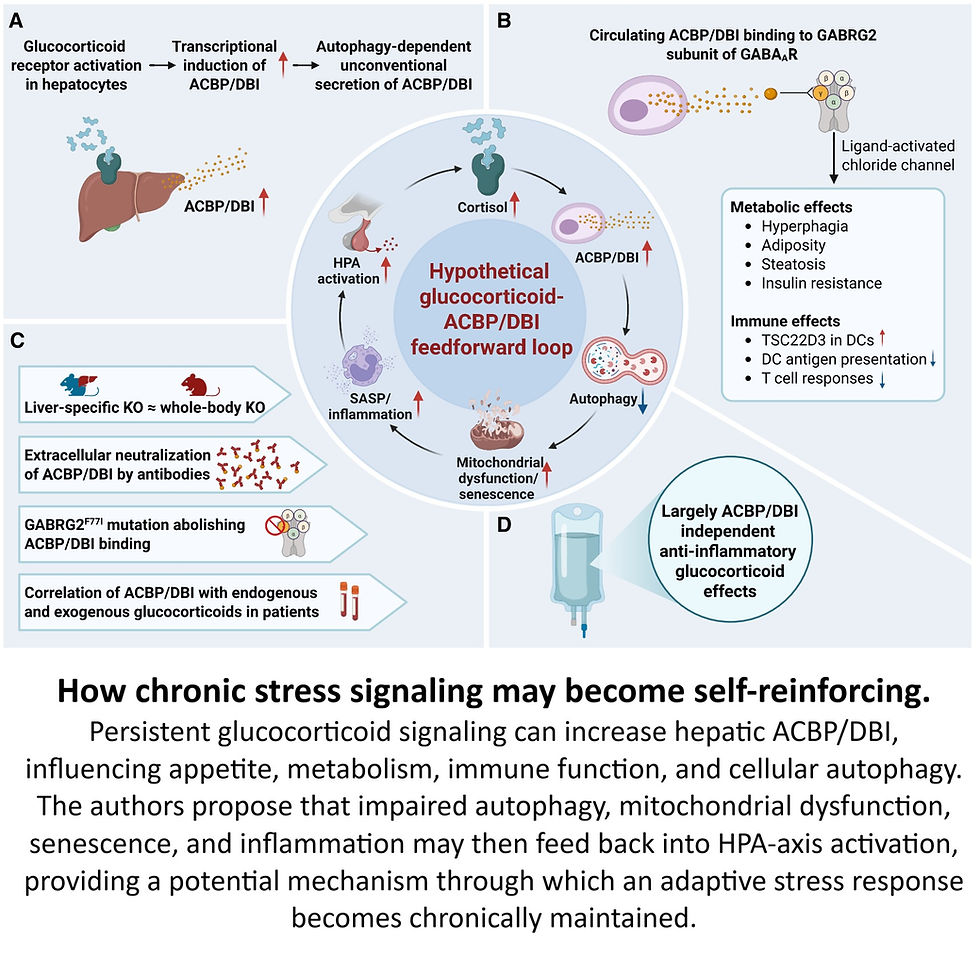
That leads naturally to the model we describe as the:
Respond → Adapt → Recover cycle
A healthy organism encounters a challenge and responds.
It mobilizes substrates.
It redistributes blood flow.
It changes endocrine signaling.
It activates immune defenses.
It changes mitochondrial activity.
It reallocates resources toward processes that are immediately necessary.
This response is often costly—but cost is not necessarily pathology.
The organism then adapts.
And, critically, after the challenge resolves, it must recover.
Inflammation should fall.
Substrate allocation should normalize.
Stress signaling should diminish.
Repair should proceed.
Autonomic and endocrine systems should recalibrate.
Energetic reserves should be rebuilt.
The key question therefore becomes not simply:
Was the stress response activated?
but:
Did the organism complete the recovery phase?
The same biology can be adaptive or maladaptive
This temporal perspective changes how many “aging mechanisms” can be interpreted.
Consider inflammation.
Kennedy and colleagues explicitly distinguished between acute adaptive inflammation, necessary for defense and recovery, and persistent low-grade inflammation that may become maladaptive with age.
That distinction can be generalized.
Temporary insulin resistance during certain stress states may help redirect substrates.
Temporary mTOR activation after feeding or resistance exercise supports protein synthesis and repair.
Reactive oxygen species can function as signaling molecules.
Cellular senescence can participate in wound healing and tissue remodeling.
Immune activation is essential for survival.
Catabolism during fasting or illness can release substrates required elsewhere.
None of these processes is intrinsically “pro-aging” simply because it appears in aging biology.
The problem may instead be:
persistence without resolution.
A biological response that is appropriate for six hours may become harmful when it remains active for six months.
This is where ERM enters the picture
Our Exposure-Related Malnutrition (ERM) framework emerged from asking what persistent adaptation might look like clinically.
The word malnutrition here does not simply mean insufficient calorie intake.
The concept concerns the mismatch between physiological demand and the resources available to sustain adaptation and recovery.
During prolonged stress, the organism must continually prioritize.
Resources may be redirected toward:
immune defense,
tissue repair,
vigilance,
substrate mobilization,
antioxidant buffering,
vascular regulation,
neuroendocrine responses.
Other functions may receive lower priority.
Transport proteins may shift.
Metabolic markers may move.
Redox systems may change.
Blood-cell indices may change.
Body composition may gradually change.
The important signal may therefore not be one dramatically abnormal laboratory test.
It may be a coordinated pattern across several physiological domains.
That leads to an increasingly important clinical distinction:
Normal does not necessarily mean physiologically neutral.
A value can remain within its population reference interval while its position, direction, relationship to other biomarkers and association with declining function may still contain useful information.
This does not mean redefining normal laboratory values as disease.
It means studying physiology as a pattern.
From ERM to Bioenergetic Impedance
The next question is mechanistic.
Why might prolonged adaptive demand become increasingly difficult to resolve?
This led us toward the concept of Bioenergetic Impedance.
The idea is deliberately not that energy is a single substance flowing through the body like electricity.
Rather, it is a physiological analogy describing a state in which the pressure of demand increasingly exceeds the capacity to conduct, transform, buffer, allocate and restore energetic resources into useful biological work.
Consider what adaptation requires.
Cells need substrates.
Substrates must be transported.
Oxygen must be delivered.
Mitochondria must convert available fuels.
Redox equivalents must be handled.
Proteins must be synthesized, folded and degraded.
Damaged structures must be repaired.
Metabolic intermediates must move through interconnected pathways.
Waste products must be cleared.
These processes require both capacity and time.
When demand persists, bottlenecks can appear.
Metabolic pathways may reroute.
Redox pressure may increase.
Mitochondrial stress signaling may rise.
Inflammatory signaling may persist.
Proteostatic demands may increase.
Other organs may compensate.
Eventually, what began as a local adaptation can become a network state.
The network matters more than any single node
This is where the 2014 geroscience commentary becomes particularly relevant.
Kennedy and colleagues were already emphasizing that aging mechanisms are interconnected across tissues and physiological systems. They called for multiscale models capable of linking cellular and organismal physiology.
Bioenergetic Impedance attempts to add a possible dynamic grammar to this network.
Imagine an initial challenge affecting one tissue.
That tissue changes metabolism.
Those metabolic changes affect circulating substrates.
Stress signals alter autonomic or endocrine activity.
Inflammatory mediators affect distant tissues.
The liver changes substrate handling.
Adipose tissue changes lipid release.
Muscle changes glucose utilization.
The brain modifies behavior and energy expenditure.
The vascular system adjusts perfusion.
The response becomes distributed.
The organism is no longer simply dealing with a local problem.
It is maintaining a system-wide adaptive configuration.
If recovery occurs, that configuration can relax.
If recovery remains incomplete, some of the configuration may persist.
The next challenge then begins from a different baseline.
Aging as accumulated incomplete recovery
This gives us a different way of thinking about aging.
Consider repeated cycles:
Challenge
→ Respond
→ Adapt
→ Recover
Under favorable conditions:
Challenge → Response → Adaptation → Recovery → restored reserve
But when demands repeatedly exceed recovery capacity:
Challenge → Response → Adaptation → incomplete recovery
followed by:
new challenge → larger compensatory requirement → still less complete recovery
and eventually:
persistent constraint → reduced flexibility → declining physiological reserve
This does not mean that all aging can be reduced to incomplete recovery.
Genetic, developmental, stochastic and environmental processes remain important.
Nor does it mean that every hallmark is simply a downstream consequence of energy limitation.
Those would be claims far beyond current evidence.
The more modest—and potentially more useful—proposal is that the capacity to recover from repeated physiological demands may be one important organizing dimension connecting several aging processes.
Hallmarks describe the landscape; dynamics describe the journey
This is where our framework differs most clearly from the conventional Hallmarks model.
The Hallmarks approach is primarily descriptive and mechanistic:
What processes characterize biological aging?
That question remains indispensable.
But a dynamic network model asks additional questions:
When did the process begin?
What challenge activated it?
Was it initially adaptive?
What resources were required?
Which tissues compensated?
Did the response resolve?
Did the system return to its previous functional range?
What residual constraint remained?
What happened when the next challenge arrived?
This transforms aging from a collection of biological states into a trajectory.
A hallmark can then have different meanings depending on where it occurs along that trajectory.
From hallmarks to physiological states
The difference can be illustrated simply.
Hallmark-oriented view
Inflammation is increased.
Dynamic question:
Is this an appropriate response to an active challenge, or inflammation that failed to resolve after the challenge disappeared?
Hallmark-oriented view
Nutrient sensing is altered.
Dynamic question:
Is the organism appropriately switching between anabolic and catabolic states, or has metabolic flexibility been lost?
Hallmark-oriented view
Mitochondrial function is altered.
Dynamic question:
Is this adaptive substrate reprogramming, temporary stress signaling, or a persistent limitation in energetic throughput and recovery?
Hallmark-oriented view
Cellular senescence increases.
Dynamic question:
Is senescence transiently assisting repair and remodeling, or have senescent cells persisted because clearance and resolution failed?
These are not competing explanations.
They operate at different conceptual levels.
Aging may involve loss of reversibility
Perhaps one of the most useful consequences of this perspective is that aging becomes less about whether a physiological variable is “high” or “low” and more about whether the system can still move appropriately between states.
Young resilient physiology is highly dynamic.
It can activate strongly when required.
Then it can switch off.
It can mobilize energy.
Then replenish it.
It can become inflammatory.
Then resolve inflammation.
It can become catabolic.
Then rebuild.
It can increase sympathetic activity.
Then restore parasympathetic dominance.
Health therefore does not necessarily mean maintaining every biological variable at an ideal midpoint.
It may mean maintaining the capacity to move and return.
Aging may progressively involve the loss of that reversibility.
Prefrailty may be where this becomes clinically visible
This is also why prefrailty is increasingly interesting.
Frailty is not simply another disease.
It represents declining reserve across multiple physiological systems.
Before overt frailty develops, there may be a period in which conventional measurements are not dramatically abnormal, yet several domains begin shifting together and the person's tolerance of stress declines.
A minor infection causes prolonged fatigue.
Travel requires longer recovery.
Exercise that was previously tolerated produces disproportionate exhaustion.
Sleep disruption has greater consequences.
Metabolic responses become less flexible.
The question becomes:
Can we detect the transition from successful adaptation toward impaired recovery before irreversible structural disease dominates?
That is the clinical territory where multidomain biomarker analysis may eventually become useful.
The aim should not be to create another single “aging biomarker.”
Instead, we may need to understand:
position + direction + domain + pattern + function + recovery trajectory.
A different research program
This framework therefore leads to different experiments.
Rather than simply asking:
Does intervention X lower hallmark Y?
we can ask:
Does the intervention improve recovery following a standardized challenge?
Does metabolic flexibility return more rapidly?
Does inflammatory signaling resolve appropriately?
Does autonomic regulation normalize?
Does functional capacity recover?
Does the organism return to its previous multidomain physiological state?
And, most importantly:
Does improved recovery preserve future challenge tolerance?
That last question connects aging biology directly to resilience and healthspan.
The framework is evolving, not finished
The Stress Adaptation Cycle, ERM and Bioenergetic Impedance should not be presented as established replacements for the Hallmarks of Aging.
They are better understood as an evolving complementary framework.
The Hallmarks remain extraordinarily useful for identifying the biological machinery involved in aging.
Geroscience tells us that those processes interact across the organism.
The Stress Adaptation Cycle adds time.
ERM adds the possibility of clinically observable multidomain adaptation.
Bioenergetic Impedance proposes a possible constraint linking demand, throughput and recovery across physiological networks.
Together they lead toward a different central question.
Not simply:
Which mechanisms cause aging?
But:
How does an organism progressively lose its ability to complete adaptation and restore itself after challenge?
Kennedy and colleagues were already pointing in this direction in 2014 when they depicted aging biology as an interconnected network and placed stress adaptation alongside metabolism, inflammation, proteostasis, damage and regeneration.
The next step may be to stop viewing those processes only as things that go wrong with age.
Some may begin as things the body is doing to survive.
The critical transition may occur when a response that should have been temporary can no longer fully resolve.
That is where adaptation becomes cost.
Where compensation begins to consume reserve.
Where recovery becomes incomplete.
And perhaps where aging becomes clinically visible.
Reference
Kennedy, B. K., Berger, S. L., Brunet, A., Campisi, J., Cuervo, A. M., Epel, E. S., Franceschi, C., Lithgow, G. J., Morimoto, R. I., Pessin, J. E., Rando, T. A., Richardson, A., Schadt, E. E., Wyss-Coray, T., & Sierra, F. (2014). Geroscience: Linking aging to chronic disease. Cell, 159(4), 709–713. https://doi.org/10.1016/j.cell.2014.10.039


Comments