
When Stress Runs Out of Fuel: What Critical Illness Teaches Us About Hidden Trade-Offs
A 2022 paper in the Journal of Clinical Endocrinology & Metabolism (Téblick, Gunst, & Van den Berghe, 2022) revisits a long-debated syndrome in intensive care called Critical Illness–Related Corticosteroid Insufficiency (CIRCI). At first glance, it looks like just another acronym from critical care medicine. But the insights from this study go far deeper — they reveal how the body manages energy and resources under extreme stress, and what happens when those adaptations break down.
What the study found
For years, doctors believed that some ICU patients in septic shock developed “relative adrenal insufficiency,” meaning their adrenal glands could not pump out enough cortisol to meet demand. Cortisol is a stress hormone essential for blood pressure, immune control, and survival.
But this new analysis showed a different story:
In acute illness, cortisol levels are often adequately high, not low.
The rise doesn’t come from producing more hormone, but from slowing down cortisol clearance and lowering the binding proteins that normally carry it in the blood.
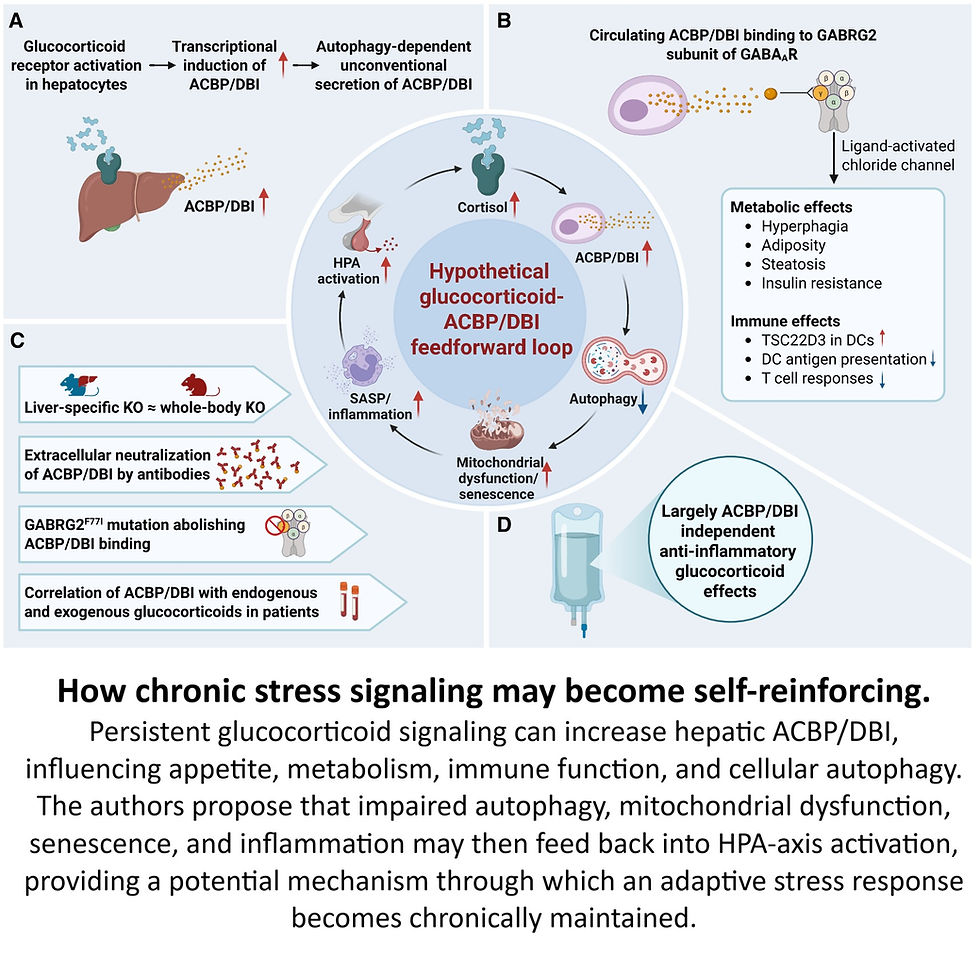
Over time, however, this shortcut backfires. Prolonged high free cortisol suppresses the brain’s ACTH signals to the adrenal gland. Without ACTH’s trophic “nourishment,” the adrenal cortex atrophies.
The result: in long-stay ICU patients, both cortisol and aldosterone production falter. This is when CIRCI really appears.
Clinically, this shows up as lingering vasopressor dependence, brain fog or encephalopathy, electrolyte imbalances, and a frustrating inability to recover.
Substrate-level trade-off
CIRCI is not just about hormones — it’s about substrate economics inside the adrenal gland.
Steroidogenesis needs precursors. Cholesterol, NADPH, mitochondrial enzymes, and cofactors are all required to sustain cortisol and aldosterone production. Under ERM, these resources are not abundant — they must be allocated selectively.
Cortisol is prioritized over aldosterone. In prolonged stress, the body protects systemic survival by keeping cortisol output online (anti-inflammatory, circulatory support, glucose mobilization). This happens at the expense of aldosterone synthesis, which depends on the same precursors and enzymes.
The clinical signature of this trade-off:
Lingering vasopressor dependence → cortisol helps vasoconstriction, but reduced aldosterone weakens sodium/water retention and vascular tone.
Encephalopathy → inadequate mineralocorticoid balance impairs cerebral perfusion and electrolyte homeostasis.
Electrolyte derangements → hyponatremia and hyperkalemia emerge from impaired aldosterone.
Failure to recover → the adrenal cortex becomes atrophic from lack of ACTH trophic support.
Reinterpreting CIRCI through ERM: adaptive failure in slow motion
This study’s reinterpretation of CIRCI fits very well as a clinical manifestation of adaptive failure or exhaustion under ERM:
Initial adaptation: In acute critical illness, cortisol availability is maintained by peripheral mechanisms (reduced metabolism, lower binding proteins). This is energy-efficient and helps the body survive the acute phase without requiring excessive ACTH drive.
Progressive exhaustion: In prolonged illness, this adaptive “shortcut” becomes maladaptive. Sustained high free cortisol plus bile acids, opioids, and drugs chronically suppress ACTH, leading to adrenal atrophy and functional impairment. This is essentially a failure of re-anabolism and resolution in the HPA axis.
Bioenergetic trade-off: The system prioritizes immediate survival (circulatory stability, stress response) at the expense of long-term integrity of the adrenal–pituitary axis. Once energy and signaling reserves are depleted, the system cannot sustain output, resulting in central adrenal insufficiency.
Clinical phenotype: The lingering vasopressor dependence, encephalopathy, electrolyte derangements, and failure to recover reflect an ERM-driven exhaustion state—substrates and signaling needed for restoration (ACTH trophic support, adrenal steroidogenesis) are depleted.
ERM framing
CIRCI in prolonged critical illness is a prototype of ERM maladaptation:
Exposure: severe illness, inflammatory load, high metabolic demand.
Response: cortisol maintained by reduced clearance and binding proteins.
Adaptation: suppression of ACTH, conserving central drive.
Exhaustion (failure): adrenal atrophy, inadequate cortisol production → clinical CIRCI.
Why it matters beyond the ICU
You don’t have to be on a ventilator to recognize this logic. Many chronic conditions — long-term stress, persistent inflammation, unresolved infections — operate by the same principle. The body borrows from tomorrow to survive today. For a time, it works. But eventually, the bill comes due.
CIRCI is therefore not just an ICU phenomenon — it’s a prototype of adaptive exhaustion. It shows us how resilience depends not just on the ability to respond to stress, but on the capacity to refuel, repair, and restore. Without adequate substrate supply and balanced recovery, the system collapses into exhaustion.
✅ Key takeaway:
Critical illness exposes the hidden rules of stress physiology. When substrates run short, the body prioritizes survival today at the cost of recovery tomorrow. CIRCI is one manifestation of this — but the same trade-offs may shape how we age, adapt, or fail in everyday life.
Téblick, A., Gunst, J., & Van den Berghe, G. (2022). Critical illness–induced corticosteroid insufficiency: What it is not and what it could be. The Journal of Clinical Endocrinology & Metabolism, 107(7), 2057–2064. https://doi.org/10.1210/clinem/dgac201
#Critical illness–related corticosteroid insufficiency (CIRCI), #Exposure-Related Malnutrition (ERM), #HPA axis suppression, #Substrate trade-offs in steroidogenesis, #Adaptive failure and exhaustion


Comments