
🏃♂️ Cortisol, Exercise, and Stress: When Adaptation Comes at a Cost
How a new study on intense exercise and stress response reveals both a powerful strategy—and a hidden risk.
A Fresh Take on Exercise and Stress
A recent study published in Psychoneuroendocrinology by Caplin et al. (2021) explored an intriguing question:Can a single bout of exercise make us more resilient to stress?
The answer, at least in the short term, seems to be yes—but with an asterisk.
The researchers asked 83 healthy young men to do 30 minutes of treadmill exercise at different intensities—light, moderate, or vigorous—then subjected them to a stressful event (the Trier Social Stress Test). Throughout the process, they tracked cortisol, the body’s main stress hormone.
What they found was striking:
Those who exercised vigorously had a lower cortisol spike when faced with the stressor.
They recovered faster.
Their stress response was dampened, as if the system had already braced itself.
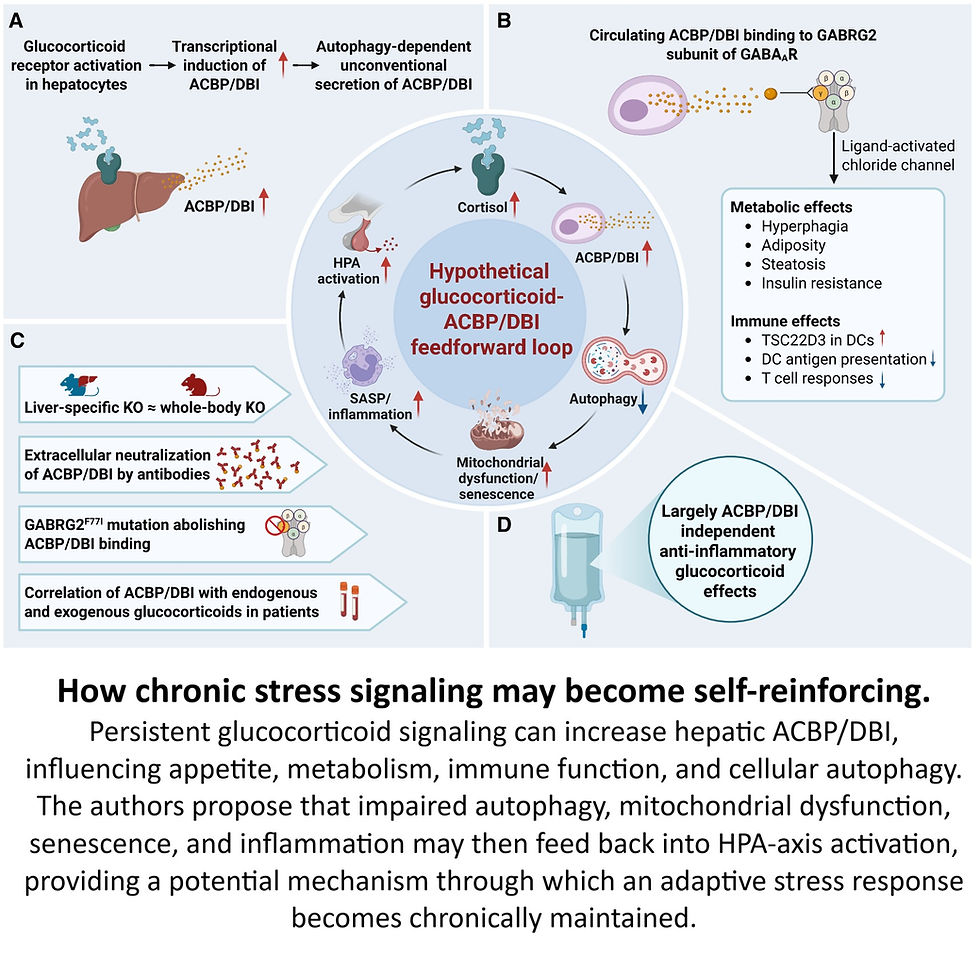
The authors concluded that vigorous exercise may buffer us against acute psychological stress, likely due to negative feedback in the HPA axis (our hormonal stress-response system).
Sounds like a win, right?
But Here’s the Twist: Resilience Has a Metabolic Price
At face value, this study supports the common belief that exercise builds stress resilience. And it does—acutely.
But if we look deeper, especially through the lens of bioenergetic trade-offs, the story gets more complicated.
The very same cortisol surge that blunts the stress response also mobilizes and consumes energy—glucose, amino acids, fatty acids—stored in muscle, liver, and fat tissue. That energy isn’t free. It’s drawn from your body's adaptive budget.
From a bioenergetic perspective, what happened here wasn’t just stress buffering—it was strategic energy spending. The system used up some of its emergency reserves during the intense exercise, which left less energy and urgency for the next stressor.
This temporary suppression of reactivity can look like resilience. But if repeated without recovery, it becomes maladaptation.
Enter the ERM and CACH Frameworks
In our model of Exposure-Related Malnutrition (ERM), we examine how chronic stress and high-demand lifestyles deplete resilience over time—not due to illness, but due to mismatched energy demand and recovery.
Caplin’s findings align beautifully with one part of this model—what we call CACH:Catabolic-Anabolic Cycling of Hormesis.
Catabolic phase: Vigorous exercise activates cortisol, breaks down stored energy to meet demand.
Anabolic phase: Recovery, repair, and rebuilding—if it happens.
But here’s the catch: most people skip or shortchange the recovery phase. They stack exercise, work, social stress, and sleep deprivation on top of each other, day after day.
In that case, the “resilience” seen in Caplin’s study may become a slow spiral of depletion:
Cortisol becomes chronically elevated or flattened.
The body stops responding to stress normally (blunted affect).
Fatigue, mood swings, poor sleep, and low-grade inflammation creep in.
What was once adaptive becomes a sign of a deeper bioenergetic exhaustion.
So, Should You Stop Exercising?
Absolutely not.
Movement is medicine—but like any medicine, the dose, timing, and context matter.
If you’re well-nourished, sleeping well, and not under chronic psychological stress, vigorous exercise can boost stress resilience.
But if you’re already depleted—burning the candle at both ends—it may backfire unless you support recovery.
That’s why the ERM model emphasizes:
✅ Matching demand with metabolic capacity
✅ Recognizing early signs of under-recovery
✅ Respecting the body’s tempo—its rhythm of work and rest
The Bottom Line
Vigorous exercise can help buffer stress—when recovery is respected.
But when adaptation becomes relentless, and energy reserves are never restored, the system quietly shifts from resilience to exhaustion.
So before you sprint into the next high-intensity session, ask yourself:
Am I recovering—or just surviving?
🧠 Learn more about the science of resilience, stress metabolism, and the hidden cost of over-adaptation at healingpassion-asia.com
📘 Or explore the deeper framework in the book From Adaptation to Exhaustion, available on Amazon
Caplin, A., Chen, F. S., Beauchamp, M. R., & Puterman, E. (2021). The effects of exercise intensity on the cortisol response to a subsequent acute psychosocial stressor. Psychoneuroendocrinology, 131, 105336. https://doi.org/10.1016/j.psyneuen.2021.105336
#Cortisol, #Exercise Intensity, #Stress Adaptation, #HPA Axis, #Bioenergetic Trade-Offs


Comments