
🧠 Resilience, Brain Health, and the Hidden Cost of Adaptation
How a New Global Framework Aligns with the ERM Model
Resilience is often celebrated as an inner strength—a badge of honor for those who “bounce back” from life’s challenges. But what if resilience is not always visible, and not always free? What if it comes at a cost—one we can measure biologically?
A remarkable new review in Nature Medicine (“Resilience and brain health in global populations,” 2025) offers a global, systems-level rethinking of resilience. Moving far beyond psychology, the paper explores how resilience is shaped across four deeply intertwined domains: biological, psychological, social, and environmental. It’s a sweeping framework that includes the exposome (our lifetime of exposures), epigenetic aging, allostatic load, nutrition, and even community-driven support systems.
This thesis aligns strikingly with a concept we’ve been working on for years: Exposure-Related Malnutrition (ERM).
🌍 When Resilience Requires Too Much
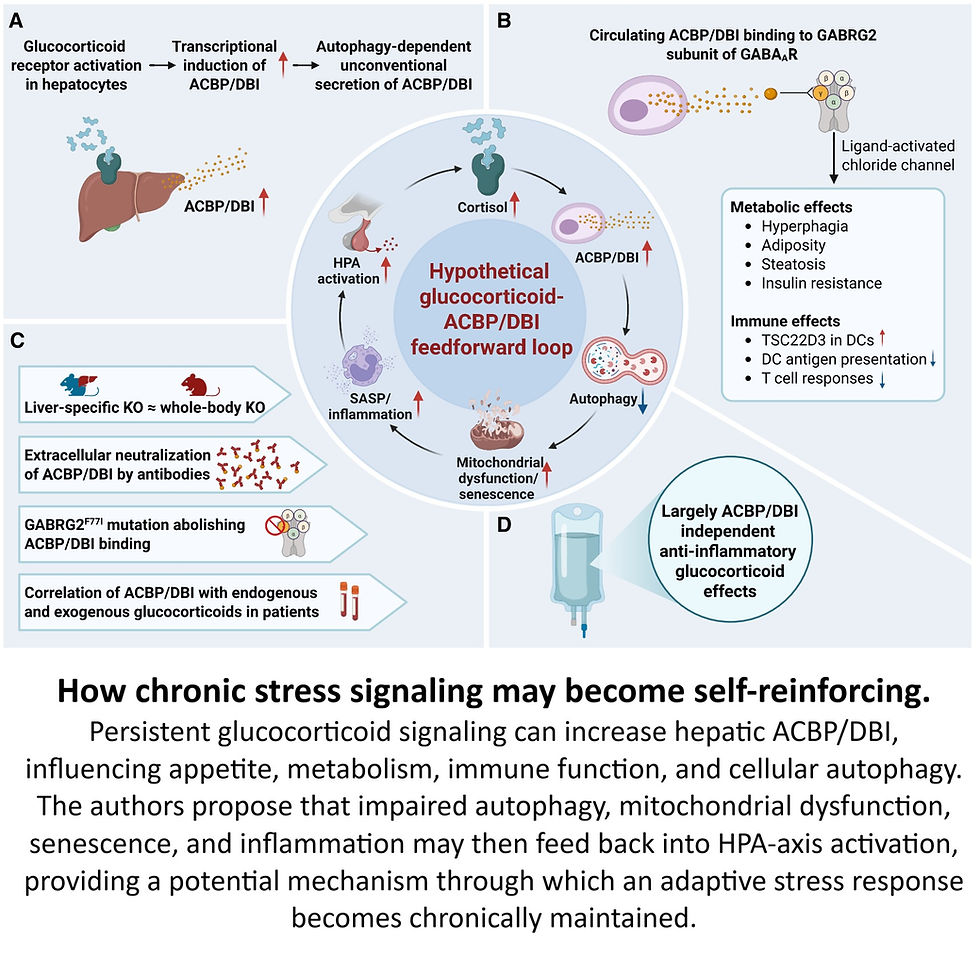
The Nature Medicine authors frame resilience not as a fixed trait but as a dynamic balance—a system constantly negotiating between stress, adaptation, and biological cost. Their model shows how chronic stress, particularly in low-resource or unequal environments, can lead to allostatic overload—where the body’s efforts to adapt begin to wear it down.
This is the exact foundation of the ERM model.
We’ve defined ERM as a physiological state of undernourishment not due to lack of food, but to the prolonged and invisible cost of chronic adaptation. It is what happens when a body is forced to cope—metabolically, emotionally, socially—without the resources to recover. Over time, this depletes nutrients, neuroendocrine reserve, and functional capacity, long before disease is diagnosed.
🔬 The Biology of Burnout
The review emphasizes how resilience is biologically embedded:
Genes like BDNF, FKBP5, and MTHFR influence stress response and neuroplasticity.
Epigenetic clocks can detect accelerated aging after early adversity.
Nutritional deficiencies—especially in omega-3s, folate, zinc, and vitamin D—impair neurodevelopment and stress regulation.
These findings support a core insight of ERM: resilience depends on available metabolic and nutrient resources, and their chronic misallocation under stress leads to measurable damage.
This also explains why symptoms like fatigue, brain fog, emotional instability, or subtle inflammation often go unrecognized—they are early-stage outputs of invisible metabolic depletion.
🧬 Hormesis and the Tipping Point
The paper discusses hormesis—the idea that mild stress can build strength—as a biological truth with cultural expression. In higher-income countries, hormetic stress might come through exercise, fasting, or cold exposure. In low-resource settings, it’s often built into daily hardship.
But when stress is chronic, unbuffered, and unrelieved, hormesis fails. This is where resilience turns into exhaustion. The ERM framework calls this unresolved adaptation, where the body remains in a costly survival mode.
🌾 Nutrition as a Key to Recovery
Importantly, the Nature Medicine review highlights the role of nutrition as a foundational lever of resilience—particularly in early life, pregnancy, and under conditions of stress. It even notes how nutrient-sensing pathways like AMPK and mTOR are disrupted under chronic strain, echoing ERM’s framing of metabolic misallocation.
When nutritional status is poor—due to stress, poverty, or malabsorption—the capacity to adapt is compromised. The result? Functional malnourishment even in people with enough calories. ERM proposes we measure and reverse this depletion before irreversible decline sets in.
📊 From Framework to Practice
The review ends with a call for integrated, equity-driven, and culturally adapted frameworks to assess and support resilience. It emphasizes the need for community-engaged tools, longitudinal biomarker tracking, and real-time monitoring—exactly what the ERM project is currently developing through both retrospective data and upcoming systematic reviews.
We believe ERM can provide a clinically usable extension of this resilience framework—translating theory into staging, screening, and targeted recovery pathways.
🧭 A New Direction for Health
This new paper doesn’t just validate the scientific foundation of ERM—it powerfully expands it. It invites us to view resilience not as an abstract virtue, but as a measurable, modifiable, and supportable biological state.
And most importantly, it reminds us that in many lives, resilience is quietly overdrawn. The sooner we detect the cost, the better we can intervene—not just to survive, but to recover.
📚 Reference
Udeh-Momoh, C.T., Migeot, J., Blackmon, K., et al. (2025). Resilience and brain health in global populations. Nature Medicine. https://doi.org/10.1038/s41591-025-03846-w
#Resilience Biology, #Allostatic Load, #Exposure-Related Malnutrition (ERM), #Neuroplasticity and Stress, #Brain Health Equity


Comments