
🔥 Chronic Inflammation Isn’t “Normal Aging” — It’s a Signal of Unresolved Stress
What if the slow-burning inflammation in your body isn’t just a natural part of getting older — but a sign that something never got resolved?
For decades, we’ve accepted the idea that aging brings an inevitable rise in chronic, low-grade inflammation — often called “inflammaging.” We’ve linked it to heart disease, diabetes, dementia, and even depression. And in Western populations, this link seems strong.
But a new paper by biological anthropologist Thomas McDade in PNAS (2023) invites us to challenge that assumption. Titled “Three Common Assumptions About Inflammation, Aging, and Health That Are Probably Wrong”, the study draws from global field research and reveals something striking:
Chronic inflammation isn’t a universal feature of aging. In many populations around the world, it doesn’t happen at all.
So what’s going on?
📊 WEIRD Inflammation vs. Global Reality
Most of what we know about inflammation comes from studies in affluent, industrialized countries — what researchers call WEIRD societies (Western, Educated, Industrialized, Rich, and Democratic). In these settings, chronic low-grade inflammation is common, even in people who aren’t sick. But in studies of indigenous and rural populations in Ecuador, the Philippines, and Bolivia — places with high infection burdens and lower obesity rates — McDade and colleagues found:
Low baseline levels of CRP (a key inflammation marker)
No evidence of persistent chronic inflammation, even when infections were common
High variability over time, suggesting short bursts of inflammation that resolved quickly
In contrast, people in WEIRD societies showed consistently elevated CRP, often without any overt infection — a pattern of unresolved immune activation.
🧬 Inflammation: Response vs. Resolution
We typically think of inflammation as the body’s defense mechanism — and it is. It ramps up to fight invaders or heal injuries.
But here’s the crucial difference: in healthy systems, inflammation turns off when the job is done. In less healthy systems, it lingers — not because there’s still a threat, but because something in the body’s regulatory wiring isn’t letting go.
McDade's work highlights that this failure to "switch off" may be learned early in life. Children raised in sanitized, nutrient-rich but microbially sparse environments may miss key exposures that teach the immune system how to regulate itself. Psychosocial stress and inadequate nutrition in early development add fuel to the fire.
⚠️ Chronic Inflammation = Unresolved Adaptation
This brings us to a critical insight:
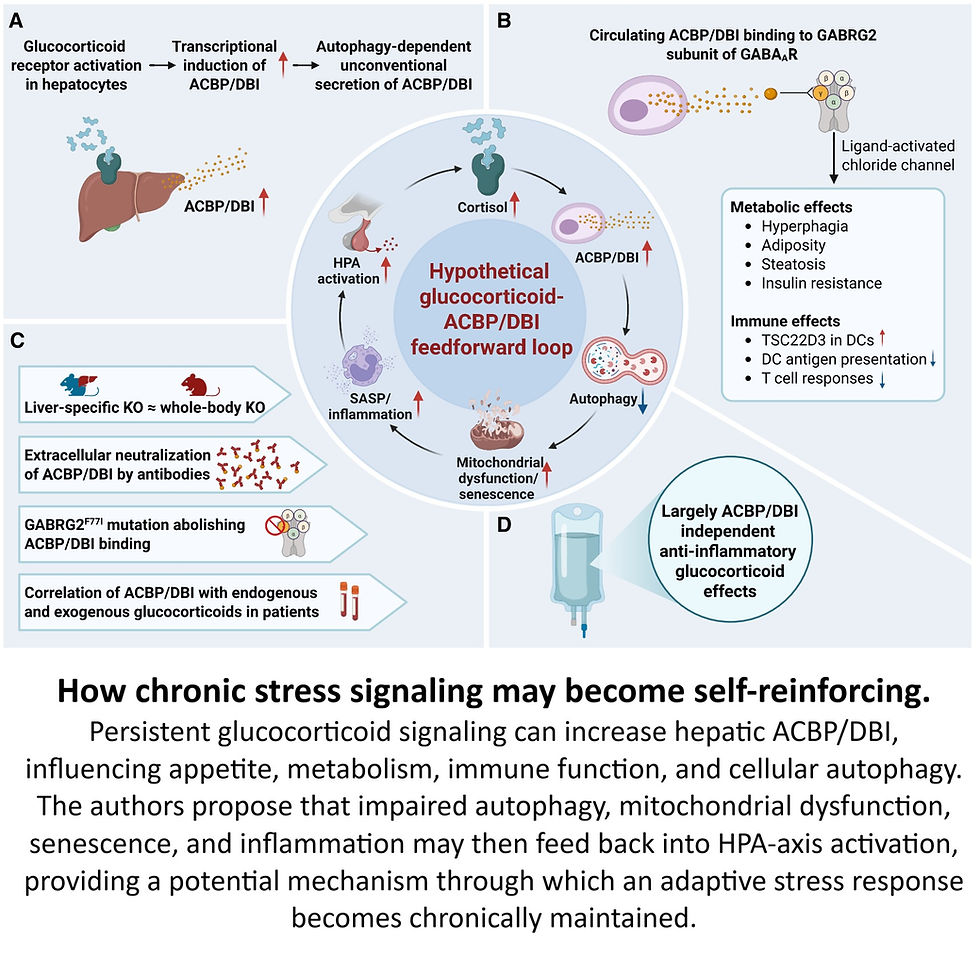
Chronic low-grade inflammation is not “normal aging.” It’s a marker of unresolved adaptation under chronic energetic or regulatory strain.
That strain might be:
A body struggling to recover from years of poor nutrition
A brain caught in chronic stress loops
An immune system that never got trained to distinguish between signal and noise
This is where the concept of Exposure-Related Malnutrition (ERM) comes in — a framework that views chronic inflammation not as a disease itself, but as a downstream consequence of adaptation gone awry.
🧭 Rethinking Resilience
ERM proposes that the body's failure to resolve inflammation is not just a fluke or a function of aging — it’s a predictable outcome when:
Resources are too low
Stress is too high
Resolution systems are too weak
Rather than seeing inflammation as a static marker, we can view it as a real-time signal of how well your body is managing its recovery budget.
In non-WEIRD populations, inflammation is responsive — it flares up, does its job, and resolves. In WEIRD settings, it’s chronic — a low hum of background distress, never fully turned off.
🌍 A Global Perspective on Aging and Inflammation
McDade’s research reminds us that our understanding of health, aging, and disease is often culturally biased — shaped by data from just a sliver of humanity.
If we want to age well, we need to look not just at how inflammation rises, but why it fails to resolve.
And that brings us back to a more empowering question:
How do we give our bodies the resources, signals, and recovery time they need to resolve what’s unresolved?
Because maybe aging isn’t the problem.
Maybe it’s what we never finished healing.
📚 Reference
McDade, T. W. (2023). Three common assumptions about inflammation, aging, and health that are probably wrong. Proceedings of the National Academy of Sciences, 120(51), e2317232120. https://doi.org/10.1073/pnas.2317232120
#Chronic Inflammation, #Exposure-Related Malnutrition (ERM), #Inflammaging, #Developmental Origins of Health, #Immune Regulation


Comments