
🧠 Growth, Recovery, and the Hidden Rhythm of Aging
Why building resilience isn’t just about boosting BDNF — it’s about honoring your body’s tempo.
We often hear about miracle molecules that could slow aging or heal the brain. One of the most well-known is BDNF — brain-derived neurotrophic factor — a protein that supports the growth, survival, and plasticity of brain cells. A recent paper by Faraji and Metz, Harnessing BDNF Signaling to Promote Resilience in Aging (2025), dives deep into how BDNF promotes cognitive and emotional resilience as we age.
Their message is compelling: BDNF is like “fertilizer for the brain,” helping neurons grow new connections, resist stress, and recover from injury. It's a powerful anabolic signal — one that tells the nervous system “Build. Adapt. Grow.”
But here’s the deeper truth: growth alone isn’t enough.
🌓 The Rhythm Beneath Resilience
Your body is not a machine. It’s a rhythmic ecosystem — and every resilient system needs balance, not just fuel.
Yes, we need BDNF. But we also need the biological counterpoint to BDNF — the periods of rest, cleanup, and repair that keep systems from overheating or overgrowing. In biological terms, this means allowing time for:
Fasting, not just feeding
Sleep, not just activity
Catabolism, not just anabolism
AMPK, not just mTOR
This back-and-forth is what I call metabolic tempo — the biological rhythm of stress and recovery, of activation and rest. It’s what makes resilience possible.
⚖️ When the Tempo Breaks: Exposure-Related Malnutrition
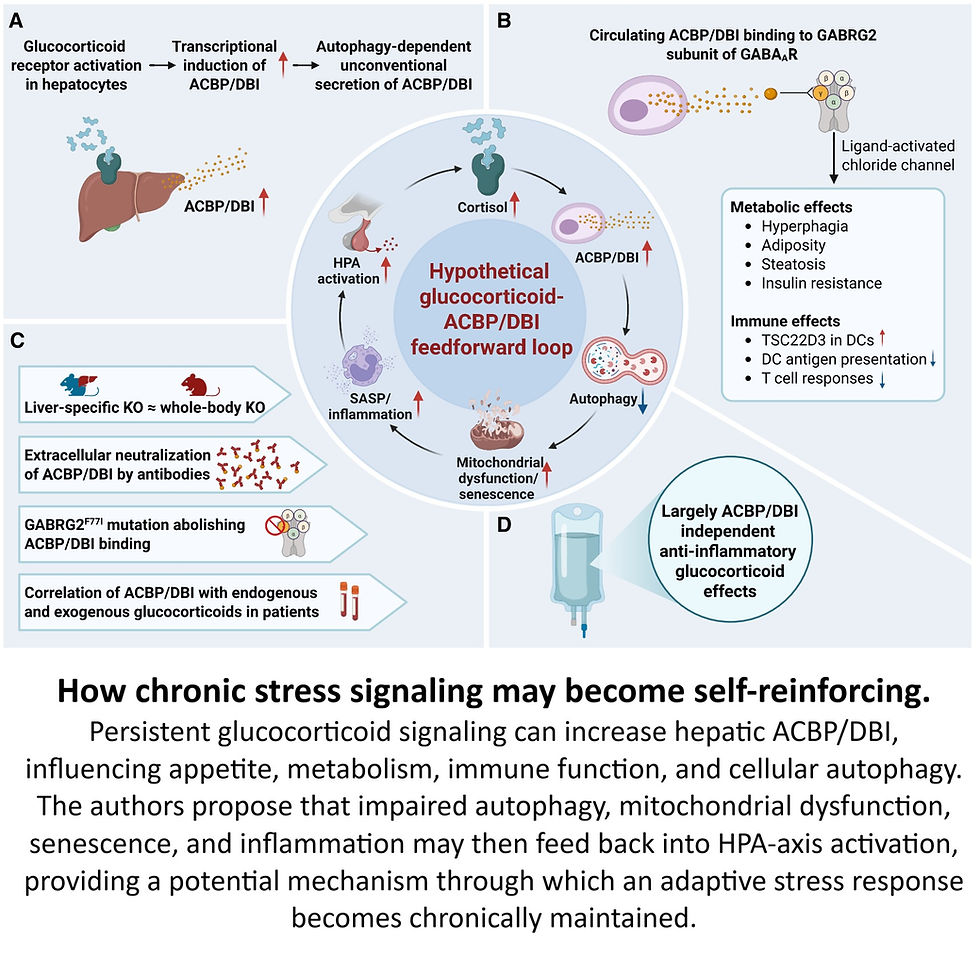
In my own research, I’ve been exploring a concept called Exposure-Related Malnutrition (ERM) — a subtle, chronic form of undernourishment that doesn’t come from a lack of calories, but from a mismatch between what the body needs and what it has the energy to do.
You can think of ERM as the biological equivalent of burnout.
The brain is trying to stay alert, but glucose is low.
The immune system is inflamed, but mitochondria are sluggish.
The cells want to repair, but there’s no downtime.
In this state, even resilience-promoting molecules like BDNF may falter — not because they aren’t important, but because the system has no energy left to listen.
🔄 BDNF and Balance
The 2025 BDNF review highlights how vital this molecule is to brain aging, especially in the face of chronic stress, inflammation, and disease. But it also quietly points out the limits: BDNF doesn’t work in isolation.
It needs time to recover synaptic balance (not just strengthen every connection).
It needs adequate sleep and mitochondrial function to act.
It needs oscillation between stress and rest — not chronic pressure.
🌱 So What Can You Do?
Supporting resilience isn't about always pushing forward. It’s about restoring your internal tempo.
Here’s how you can start:
Fast occasionally. Give your cells time to clean house.
Sleep like it’s your job. It is.
Move your body. Exercise stimulates BDNF — and the catabolic systems that balance it.
Take breaks from stimulation. Growth happens in the silence between the signals.
And above all, remember: You’re not broken — you’re exhausted. You can recover.
📚 Want to Learn More?
Follow our work on Exposure-Related Malnutrition (ERM) to understand how stress and metabolic mismatch wear down resilience before disease ever appears.
Faraji, J., & Metz, G. A. S. (2025). Harnessing BDNF signaling to promote resilience in aging. Aging and Disease, 16(4), 1813–1834. https://doi.org/10.14336/AD.2024.0961
#Brain-Derived Neurotrophic Factor (BDNF), #Neuroplasticity, #Aging, #Resilience, #Stress Adaptation


Comments